The Significance of Fire and the Gods in Roman Rituals
Fire has always occupied a central position in human history and culture, and in ancient Rome, it was no different. The Romans imbued fire with profound significance, intertwining it with religious rituals and the worship of their pantheon of gods. This article explores the multifaceted role of fire in Roman rituals, detailing its symbolic meanings, its connection to divinity, and its practical applications in worship.
The Symbolic Nature of Fire
In Roman culture, fire symbolized purity, transformation, and the essence of life itself. It represented the divine presence and was seen as a link between mortals and the gods. Fire had the capacity to consume, transform, and illuminate; thus, it was a powerful metaphor for the human experience, encapsulating the cycle of life and death.
Romans believed that fires dedicated to the gods acted as a conduit for divine communication. The act of lighting a fire was not merely a practical measure; it was steeped in ritual significance. The flames were seen as offerings, a way to please the gods and invite their blessings. The flickering light was thought to illuminate not only the material world but also the spiritual realm, creating an interface where mortals could engage with the divine.
Fire in Religious Practices
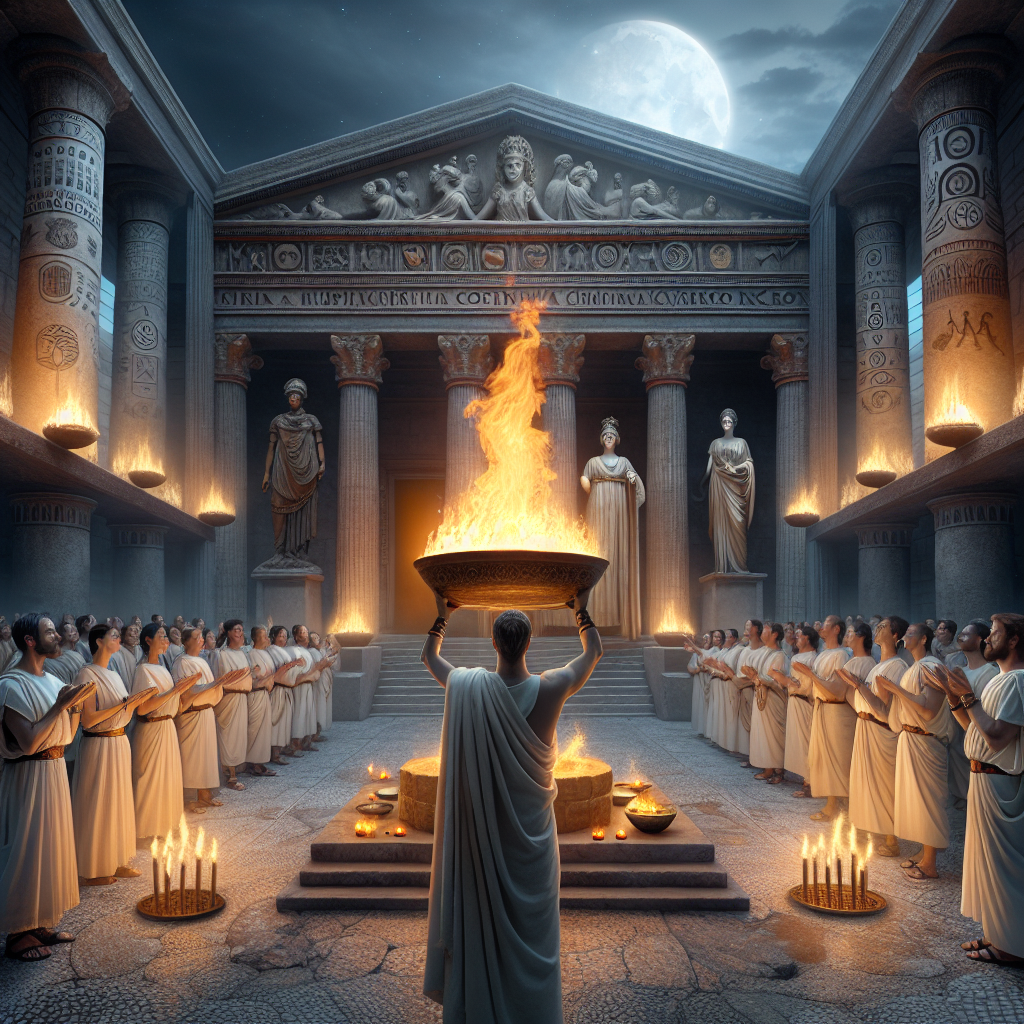
Fire was integral to various Roman religious ceremonies, particularly in the worship of Vesta, the goddess of the hearth. The Vestal Virgins, a group of priestesses, were tasked with maintaining the sacred fire of Vesta in her temple. This fire represented the heart of the city and was believed to be a protective entity that safeguarded the Roman state.
The Vestal Virgins played a crucial role in Roman society. Their chastity was essential to their service, as it symbolized the purity that fire represented. If the sacred fire ever went out, it was considered an omen of disaster for Rome. Thus, the vigilant maintenance of this eternal flame was a communal responsibility, reflecting the collective belief that the health of the city depended on it.
Fire Offerings and Sacrifices
Fire also played a central role in offerings and sacrifices. The Romans engaged in various rites where animals, grains, or oils were burned as offerings to the gods. Sometimes, these sacrifices were made during significant moments, such as the founding of a city or the beginning of a war. The smoke rising from these offerings was thought to carry the wishes and prayers of the faithful up to the heavens.
The act of burning offerings was imbued with layers of meaning. It demonstrated devotion to the gods, but it also acted as a purifying agent. Fire’s ability to consume and transform made it the ideal medium for symbolically cleansing the supplicant’s desires and intentions. In this way, fire became a bridge—it facilitated communication between the human and the divine.
Festivals and Fire
Roman festivals were vibrant showcases of public devotion and often involved fire prominently. One such occasion was the festival of Lupercalia, celebrated in February to appease the gods of fertility and purification. During this festival, celebrants would light bonfires and make sacrifices, embodying the chaotic energy of renewal and fertility.
Another important festival was the Flamen Dialis, dedicated to Jupiter, the king of the gods. The ritual often included the lighting of fires to magnify Jupiter’s presence and active participation in the lives of the people. These festivals were not only religious observances but also communal gatherings, fortifying social bonds and collective identity.
The Role of Fire in the Augury Process
Fire also had a significant role in the practice of augury, where priests called augurs interpreted omens from the behavior of birds and the appearance of natural phenomena. Fire was used to create smoke signals that were believed to attract the attention of the gods, ushering divine insight into the human realm. The rituals that employed fire for augury were as much about invoking divine favor as they were about the interpretation of omens.
This aspect of fire in ritual further solidified its status as a tool for humans to connect with the divine. It was seen as a medium that could elicit responses from the gods, inviting them to guide and direct human actions.
Protective and Purifying Qualities
The protective qualities of fire were also significant in Roman beliefs. Fire was often used in magical rites to ward off evil spirits and misfortune. The Romans believed that fire had the power to purify spaces and objects, driving away malevolent energies. By invoking fire in rituals, they created a sacred environment wherein the divine could manifest and provide protection.
The act of purification with fire was not strictly limited to rituals but extended to daily life, where households maintained a sacred flame to protect against misfortunes and ensure prosperity. This integration of fire into everyday practices emphasized its importance beyond the confines of formal religious observances.
Conclusion
The significance of fire in Roman rituals is a testament to its complex interplay between the material world and the divine. Fire represented more than mere physicality; it encompassed symbols of purity, transformation, and communal identity. It played vital roles in the worship of gods, adherence to cultural practices, and the shaping of communal bonds.
In a society as interconnected as ancient Rome, the use of fire forged a path toward understanding the divine, creating shared experiences that resonated through generations. The sacred flames served not only as a means of communication with the gods but also as a reflection of Roman identity, illustrating the fusion of religion, culture, and civic life. The legacy of these practices reminds us of the timeless human fascination with fire—a phenomenon that continues to captivate and inspire people across cultures and epochs.