The Relationship Between Weather and Roman Gods
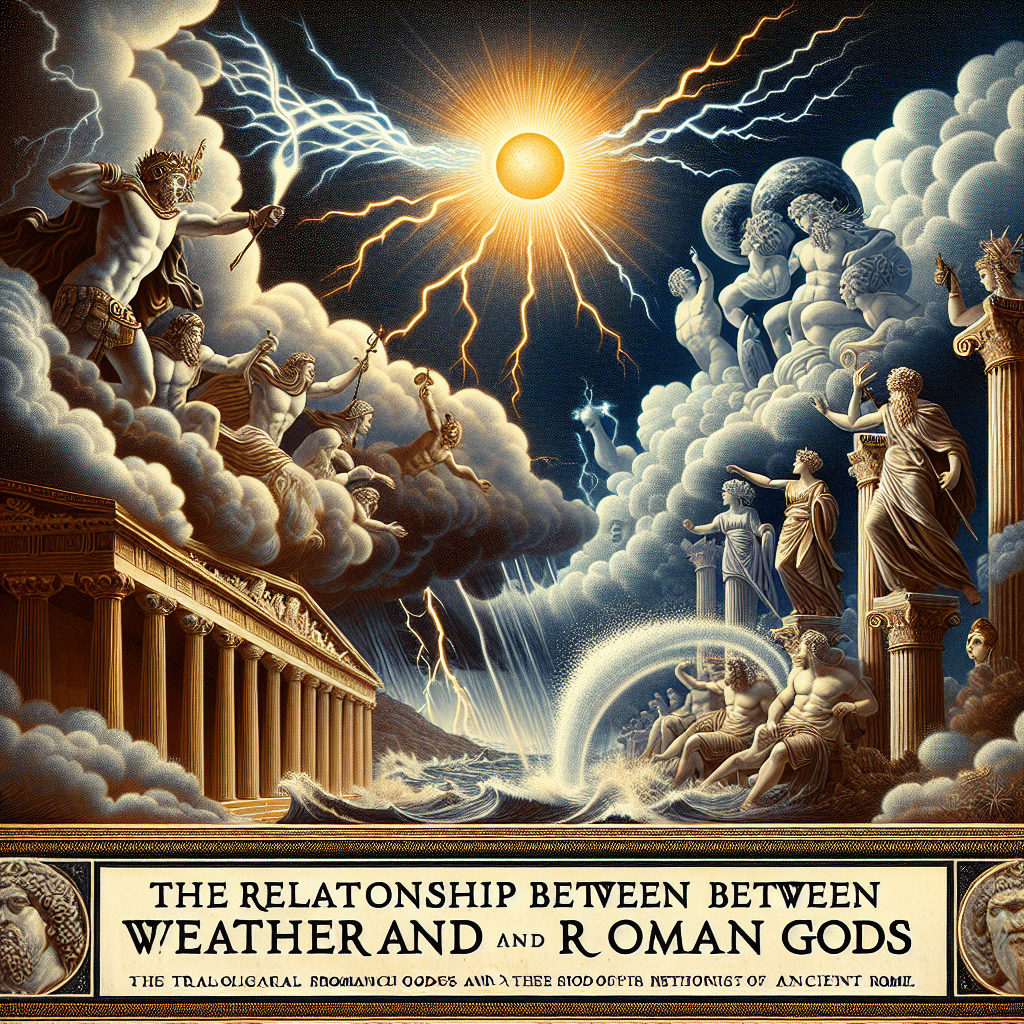
The ancient Roman civilization, renowned for its complex religion and rich mythology, had a profound relationship with the natural world, particularly the weather. The Romans attributed various weather phenomena to divine intervention, believing that their gods controlled and influenced every aspect of the environment. This article explores the intricate connections between weather and the Roman pantheon, examining how the ancients personified natural forces and sought divine favor for agricultural prosperity, military success, and general well-being.
Roman Pantheon: Gods of Weather
Central to Roman religious life were gods specifically associated with weather phenomena. The most important among these deities was Jupiter, the king of the gods. Jupiter, equivalent to the Greek Zeus, was not only the god of the sky but also wielded control over thunder, lightning, and storms. His lightning bolts were considered instruments of divine judgment and power. Romans would often look to Jupiter for protection and guidance, especially before significant events like battles or agricultural festivals.
Another significant deity was Neptune, who ruled over the seas. While primarily known as the god of water, Neptune’s influence extended to storms and the weather associated with maritime travel. Sailors, in particular, prayed to Neptune for safe voyages and favorable winds. The Romans held a deep reverence for the sea and its unpredictability, making Neptune a central figure in their naval endeavors.
Vulcan was the god of fire and volcanoes, representing the fiery storms that could devastate crops or towns. Romans believed that he could unleash destructive storms of fire, linking his force with the potential for both creation and destruction. This duality in Roman beliefs about weather gods reflects their understanding of nature’s unpredictability and power.
Agricultural Practices and Weather Deities
Agriculture was the backbone of the Roman economy, and the weather was of paramount importance to farmers. The Romans worshipped several deities associated specifically with agricultural weather. Ceres, the goddess of agriculture and grain, was pivotal in ensuring favorable weather for crops. Festivals were held in her honor, particularly the Cerealia, where prayers and offerings were made to secure good harvests. Farmers sought her blessings to prevent droughts or storms that could ruin their fields.
Moreover, Flora, the goddess of flowers and spring, was celebrated during the Ludi Florales festival, which coincided with the blooming of plants. This celebration was not only a time of joy and revelry but also a moment for Romans to pray for a favorable climate that would enhance agricultural output. The intermingling of weather, agriculture, and divine favor was essential in Roman societal beliefs.
Omens and Weather Phenomena
The Romans were keen observers of nature, and they often interpreted weather phenomena as omens, reflecting the will of the gods. Rain, thunder, and other meteorological events could indicate divine favor or disfavor. For instance, an unexpected storm could signal the wrath of Jupiter, while clear skies might be viewed as a sign of his approval. Roman augurs, priests specialized in interpreting the will of the gods, often used weather patterns as a means of divination, guiding everything from military decisions to political appointments.
The books of augury recorded specific weather signs and their meanings. A sudden thunderstorm could indicate the need to postpone a military campaign, whereas calm weather might suggest it was an auspicious time to engage in battle. Such beliefs reinforced the connection between divine intervention and the success or failure of human endeavors.
Festivals and Weather
The Roman calendar was filled with festivals that coincided with various weather seasons and agricultural cycles. The Saturnalia, honoring Saturn, was celebrated in December and marked a period of renewal and hope for the new planting season. This festival was closely tied to the winter solstice, a time when Romans looked to the return of light and favorable weather for agricultural growth.
Similarly, the Vestalia was dedicated to Vesta, the goddess of the hearth and home. Though it primarily focused on domestic life, Vesta also had connections to the community’s agricultural wealth. During this festival, rituals were performed to ensure that the weather would be conducive to a bountiful harvest.
The Romans also observed the Ludi Romani, a significant festival opening with games dedicated to Jupiter. This festival underscored the connection between divine favor, public welfare, and the weather, as favorable conditions were critical for the festivities.
Weather and Warfare
For the Romans, weather played a critical role not just in agriculture but also in warfare. The success of campaigns often depended on seasonal weather conditions. Generals would consider the time of year and prevailing weather when planning military strategies. For example, invading during the rainy season could hinder troop movements or supply lines, a realization that led commanders to seek the favor of the gods for clear skies and strong winds.
The Romans believed that certain deities could influence the outcome of battles through weather. The goddess Bellona, associated with war, was often called upon for protection against inclement weather during military campaigns. Romans would invoke her, hoping for favorable weather conditions that could turn the tide in their favor.
Conclusion
The relationship between weather and the Roman gods is a compelling aspect of ancient Roman culture, revealing how deeply interconnected the natural world and religion were in the daily lives of citizens. From agricultural reliance on Ceres and Flora to the military strategies dictated by Jupiter and Neptune, weather was seen as a direct manifestation of divine will. This understanding shaped rituals, festivals, and societal practices, illustrating the intricate web of belief that tied the Romans to their environment. Through their reverence and respect for the gods associated with weather, the Romans sought to ensure the prosperity and stability of their civilization, both in the fields and on the battlefield. In reflecting on this relationship today, we gain insight into how ancient cultures perceived their world, where the divine and natural were irrevocably intertwined.