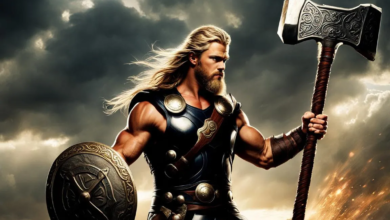

Throughout the ages, Thor, the god of thunder, has captivated hearts and minds with his tales of heroism, strength, and occasionally, mischief. His adventures are not just legendary tales of valiant deeds and epic battles; they also showcase a lighter side – the hilarity of mistakes, misunderstandings, and the camaraderie among gods and men. This blend of valor and levity has made Thor a beloved figure in Norse mythology, and his escapades continue to inspire countless adaptations in literature, film, and comics.
The Mighty Thor: An Introduction
In Norse mythology, Thor is not only recognized for his immense strength but also for wielding Mjölnir, his iconic hammer. With power over storms, thunder, and lightning, he serves as a protector of both gods and humans. The son of Odin, the Allfather, and Jord, the earth goddess, Thor embodies the rugged, warrior spirit, standing against the chaotic forces of giants and beasts that threaten the stability of Midgard (Earth) and Asgard (the realm of the gods).
Thor’s adventures often encompass a dual nature: towering heroism and delightful mischief. These facets of his character engage readers and audiences alike, presenting a god who is relatable and approachable.
Heroic Quests
The Journey to Jotunheim
One of Thor’s most celebrated quests is his journey to Jotunheim, the land of the giants. The tale begins when Thor and Loki, his trickster companion, decide to visit the giants to prove their strength. Armed with Mjölnir and accompanied by the cunning Loki, Thor sets off—his thunderous footsteps a harbinger of his arrival.
In Jotunheim, they are greeted by the giant King Thrym, who has stolen Mjölnir and demands the goddess Freyja as his bride in exchange for its return. Determined to reclaim his weapon, Thor hatches a plan, donning a bridal gown and taking Loki as his maid. This hilarious twist sets the stage for unforeseen complications.
As the duo navigates the giant’s home, Thor nearly gives himself away with his robust appetite, devouring an entire feast meant for brides. The comedic elements highlight not only the absurdity of the situation but also the cleverness of Loki as he improvises, aiding Thor in maintaining his cover. Ultimately, the plan succeeds when Thor reveals his true identity and uses Mjölnir to defeat Thrym and the giants, all while leaving a trail of chaos and laughter in their wake.
The Battle with the Midgard Serpent
Another of Thor’s legendary battles is against Jörmungandr, the Midgard Serpent, a creature so large it encircles the Earth. Their encounter is not merely a clash of titans; it is also a story about fate, family, and the inevitable clash between order and chaos. Thor, always the brave warrior, challenges the serpent in a monumental battle that symbolizes the struggle against overwhelming odds.
As Thor and Jörmungandr wrestle, there is an underlying tension stemming from prophecy—a foreboding that this battle will not only determine the fate of the gods but also that Thor will meet his demise through the serpent. This poignant detail adds depth to his character, showcasing the weight of responsibility that comes with extraordinary strength. The clash is both heroic and tragic, underscoring the duality of Thor’s existence.
Mischievous Adventures
Thor’s Hair: The Daring Theft
Thor’s adventures often take a humorous turn, especially when they involve blunders and pranks. One such tale focuses on the mischief that ensues over Thor’s missing hair. In a fit of rage, Loki cuts off Thor’s golden locks, leaving him embarrassed and furious.
In order to make amends and avoid Thor’s wrath, Loki must venture to the dwarves, the master craftsmen, to create a new set of hair for Thor. This venture leads to the creation of not just new golden hair but also other powerful treasures like Odin’s spear and Freyja’s necklace. The ensuing competition between the dwarves leads to comical situations, showing that Loki’s mischief has a knack for turning into unexpected advantages.
The humorous depiction of Thor dealing with the fallout of his friend’s prank reveals the lighter side of their friendship, highlighting the dynamics between deities that range from bickering to camaraderie.
The Shape-Shifting Saga
In another amusing adventure, Thor finds himself subjected to the whims of Loki when he agrees to partake in a series of games with the gods. When Loki loses a bet, he transforms Thor into a female form to sneak into a gathering of giants—a clear nod to gender-bending humor in mythology. Thor, now in disguise as the goddess Freyja, must navigate a world where his masculinity is challenged.
This tale paints a picture of humor and highlights the intricate relationships among gods and giants, forcing Thor to rely on his wits rather than sheer strength. As comedic misunderstandings unfold, it becomes clear that even the mightiest of warriors can find themselves in humorous predicaments.
Legacy of Love and Laughter
Thor’s tales intricately weave together heroism and mischief, reminding us that even the strongest among us are not impervious to folly. His adventures serve as metaphors for the human experience—highlighting themes of friendship, loyalty, and the constant struggle against chaos. Through laughter and bravery, he becomes a symbol not only of strength but also of resilience and the ability to embrace life’s unpredictable nature.
Moreover, Thor’s legacy transcends mythology, permeating modern culture through comics and films that continue to reinterpret his character for new generations. His struggles, victories, and lighthearted moments resonate deeply, making Thor an enduring symbol of heroism interspersed with the whimsy of life.
In an ever-changing world, Thor’s adventures remind us of the importance of camaraderie, humor, and the acceptance of one’s flaws. As we navigate our trials and tribulations, it is Thor’s spirit of valiant joy that inspires us to embrace every challenge with thunderous laughter and unyielding courage.