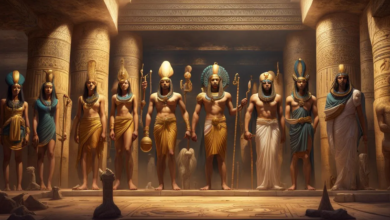

The myth of Osiris is one of the most poignant narratives within ancient Egyptian mythology, encapsulating themes of death, resurrection, and the cyclical nature of life. Osiris, the god of the afterlife, the underworld, and the dead, is central not just to Egyptian spiritual thought, but also to the understanding of life’s impermanence and the hope for renewal. His resurrection story is not just a cautionary tale of jealousy and betrayal; it serves as a profound symbol of transformation, reminding us that from darkness, light can emerge.
The Myth of Osiris
The story of Osiris begins with his reign over Egypt as a god of fertility and agriculture. He brought civilization to the land, teaching the Egyptians about farming and the cycles of nature. Osiris was deeply beloved by his people and deemed a benevolent ruler. However, jealousy brewed within his younger brother Set, who represented chaos and disorder. In a desperate bid for power, Set tricked Osiris and murdered him, dismembering his body and scattering the pieces across the Egyptian landscape.
This act of treachery serves as a metaphor for the destructive forces present in life—envy, greed, and betrayal. Yet, the myth does not end in despair. Osiris’s wife, Isis, symbolizes love, loyalty, and resilience. She embarked on a quest to gather the scattered pieces of Osiris, ultimately reassembling his body and performing the first rites of embalming. In a miraculous event, Osiris was resurrected, allowing him to reign as the king of the afterlife, proving that life persists even after death.
Symbolism of Resurrection
The resurrection of Osiris is a powerful symbol that resonates with many. It represents the cyclical nature of life and death—an eternal cycle where death does not signify an end, but rather a transformation into another form. As Osiris rises, he embodies the principle that renewal follows decay, akin to the agricultural cycles of planting and harvesting, life and death, and dark and light.
This cyclical perspective is ingrained in many cultures and religions. Just as seeds lie dormant in the winter, ready to sprout anew in the spring, Osiris’s resurrection signifies hope. Life’s trials and tribulations may bring about moments of despair, yet these same experiences can lead to personal growth and renewal. His story teaches us that even in moments of profound sorrow, there is the potential for rebirth.
Cultural Impact and Legacy
Throughout history, the myth of Osiris has left a profound impact on art, literature, and spiritual beliefs. The annual Osiris Mysteries, celebrated during the inundation of the Nile, were rituals that reenacted his death and resurrection, reinforcing the cycle of life in the collective consciousness of the ancient Egyptians. These ceremonies fostered community bonds, reminding participants that they were part of a larger cycle that involved death and rebirth.
Osiris’s resurrection influenced the spiritual landscape beyond Egypt, inspiring themes present in other religious contexts. For example, the concept of resurrection finds parallels in various faiths, including the Christian notion of Jesus Christ’s resurrection. Just as Osiris was reborn into the afterlife, Christians believe in eternal life through Christ. This shared theme underscores a universal yearning for hope and redemption across cultures.
Psychological Dimensions
On a psychological level, the myth of Osiris can be interpreted to mirror the human experience. The feelings of loss and despair that accompany death are universal, and Osiris’s story offers a framework for processing grief and seeking healing. The act of resurrection serves as a testament to the human spirit’s resilience in the face of adversity.
Individuals often find inspiration in personal trauma, discovering inner strength they never knew they had, akin to Isis’s relentless pursuit to revive her husband. This search for renewal can take many forms, whether through artistic expression, community support, or personal reflection. The metaphor of Osiris invites individuals to embrace their own experiences of loss and transformation, reminding them that renewal is possible.
Nature and Spirituality
The cyclical nature of Osiris’s story intertwines with the rhythms of nature. As a god of fertility associated with the annual flooding of the Nile, Osiris embodies the natural world’s ability to rejuvenate. Each spring, as the Nile recedes, fertile soil is left behind, prompting new crops to flourish. This natural cycle parallels the resurrection, illustrating that from death and decay, new life can arise.
Nature’s cycles offer wisdom: they remind us that life is ever-evolving, and our struggles and losses contribute to our growth. Embracing the lessons of Osiris encourages individuals to view challenges as opportunities for transformation. This connection between the natural world and spiritual rebirth is vital in many philosophies, reminding us to find harmony and balance within ourselves and the environment.
Conclusion
The resurrection of Osiris transcends the confines of ancient mythology; it stands as an enduring symbol of hope, resilience, and renewal. Osiris’s journey from treachery to resurrection highlights the transformative power that can arise from adversity. It encourages us to acknowledge the inevitability of loss while never forgetting the potential for new beginnings.
In a world often filled with uncertainty and change, the myth of Osiris reminds us of the importance of persevering through life’s challenges. The story offers a beacon of hope, illustrating that every ending is merely a prelude to a new beginning. Through Osiris’s resurrection, we are invited to reflect on our own lives, embrace the cycles of growth and decay, and find solace in the belief that even in our darkest moments, renewal is always possible.