
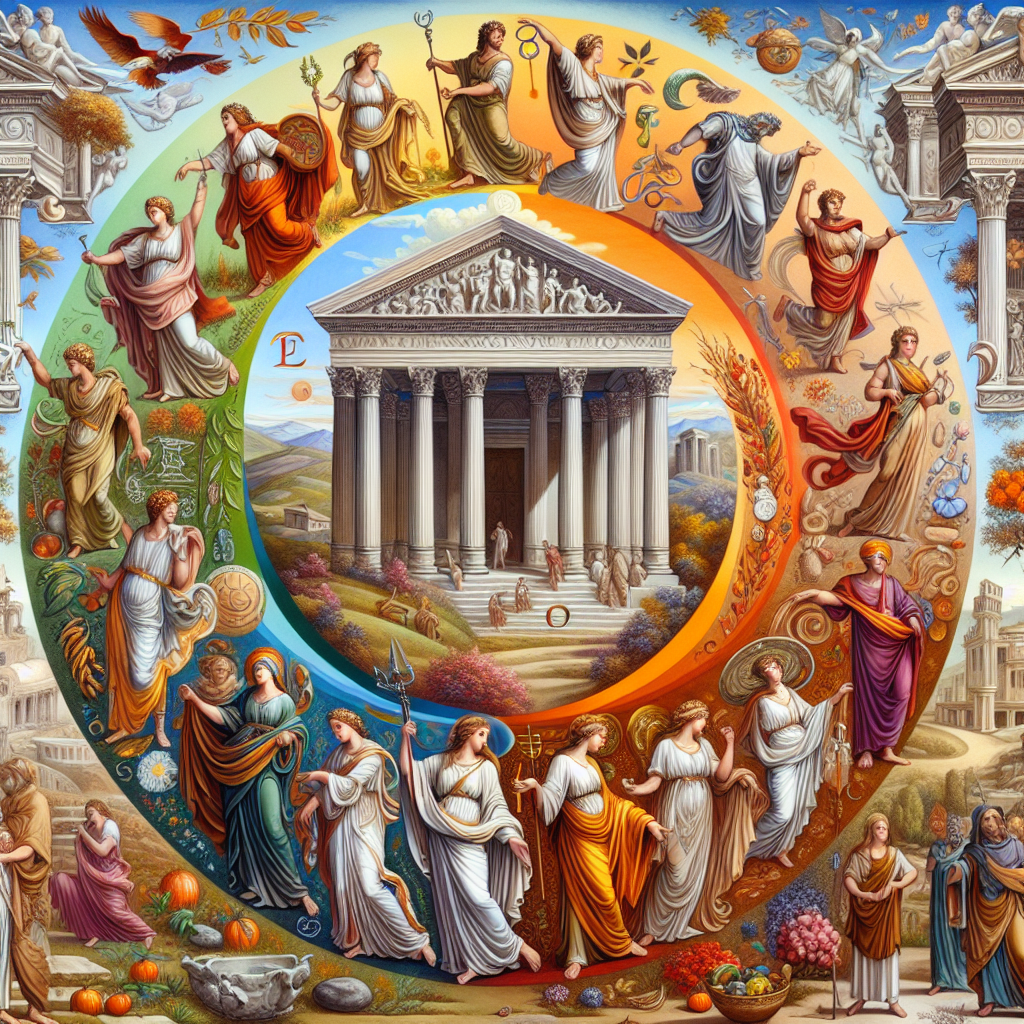
The Mythology of Seasonal Changes in Ancient Rome
The ancient Romans were deeply intertwined with the cycles of nature, observing how the changing seasons influenced agricultural practices, festivals, and religious rituals. Their mythology was intricately linked to these seasonal changes, reflecting the Romans’ reverence for nature and the gods they believed governed it. From the warmth of spring’s rebirth to the somber depths of winter, each season was personified and mythologized, imbuing daily life with a deeper spiritual significance.
Spring: The Rebirth of Flora and Fertility
In Roman mythology, spring was celebrated as a time of renewal and fertility, largely embodied by the goddess Flora, the deity of flowers and the flowering of plants. Flora was revered during the Floralia, a festival held in April, which welcomed the blooming of flora and the increase of agricultural productivity. This festival featured games, theatrical performances, and a sense of jubilant revelry. Romans honored Flora with offerings, including flowers, recognizing her integral role in the fertility of the earth.
Another significant figure linked to spring was Ceres, the goddess of agriculture. Ceres was often depicted with sheaves of wheat, symbolizing the bountiful harvest that springtime promised. The Cerelia, a festival held in her honor in mid-April, involved rituals and sacrifices designed to ensure successful crop yields. As nature awakened, so too did the spirits of the earth, underlining the intertwined relationship between Roman society and the deities that governed the cyclical changes in their environment.
Summer: Celebration and Abundance
As spring transitioned into summer, the Romans celebrated its vitality through various festivals that honored gods associated with abundance and revelry. The mid-summer festival known as the Vinalia involved the pouring of wine in prayers to Venus, the goddess of love and beauty, and Jupiter, king of the gods. This festival symbolized not only the ripening of grapes but also the joys of summer—sunshine, warmth, and the peak of agricultural bounty.
The Romans also invoked the goddess Pomona, associated with fruit and orchards. Pomona was often depicted holding various fruits, symbolizing the abundance of the season. Her worship included blessings for the flourishing of orchards, reinforcing the agricultural aspect of Roman life. Through rituals and prayers, Romans recognized the importance of favorable weather and fruitful harvests that summer brought, marking it as a time of joy and community gatherings.
Autumn: Harvest and Reflection
Autumn in ancient Rome was a season of gathering and gratitude. It emphasized the culmination of the year’s agricultural efforts, marked by the celebration of the Ludi Romani, Rome’s oldest religious festival, which included dramatic performances and raced chariots. The festival honored Jupiter, and it was thought that the success of the harvest depended on his favor.
The goddess Tellus, representing the earth and fertility, was also honored during this time. The Romans offered prayers and sacrifices to ensure the land remained fruitful for the next planting season. The Consualia, a harvest festival, paid homage to Consus, the god of grain storage, and was marked by games and festivities, epitomizing the communal spirit of gratitude for the bounty received.
Autumn was also a time of reflection for the Romans, as the decreasing daylight mirrored the approach of winter and the introspective nature of the season. The shift in weather served as a reminder of nature’s cycles and the necessity of preparing for the challenges of winter.
Winter: Rest, Remembrance, and Renewal
The winter months brought a stark contrast, ushering in darkness and cold. Yet, this season was also rich with mythology and sacred traditions. Saturn, the god of sowing, was central to Roman winter celebrations. The festival of Saturnalia, held in mid-December, was one of the most important in the Roman calendar. It honored Saturn’s reign over the Golden Age, a time of peace and plenty. During this festival, societal norms were upended; slaves were granted temporary freedom, reflecting a time of revelry and abundance, akin to the mythological past of ease and festivity.
As winter progressed, the Romans celebrated Lupercalia, a fertility festival in February that was tied to the purification of the earth and the coming of spring. Lupercalia marked the transition from winter back to the anticipation of spring’s renewal. During this festival, men would run through the streets, striking women with strips of goat hide, believed to promote fertility and ease childbirth—a way to rekindle hope amidst the starkness of winter.
The winter solstice, known as the Dies Natalis Solis Invicti, celebrated the rebirth of the sun. This festival highlighted the cyclical nature of life, as Romans recognized that even in the darkest months, light and life would eventually return. The sun was personified as a god, Sol, who symbolized the hope of renewal and the promise of warmer, productive days ahead.
Conclusion: The Integration of Nature and Belief
The mythology of seasonal changes in ancient Rome represents a profound understanding of the natural world, highlighting a symbiotic relationship between humanity and the divine. Through the personification of seasons and the observance of various gods and festivals, the Romans crafted a tapestry of beliefs that both celebrated and sought to influence the rhythms of nature.
Their agricultural practices, cultural traditions, and societal values were all shaped by these seasonal myths, reflecting a worldview that embraced life’s cycles. Even today, the echoes of Roman mythology resonate in the collective memory, reminding us of our connection to nature and the rhythms that govern our lives. As modern society continues to navigate a fast-paced existence, the lessons of the ancients remain ever relevant: the importance of honoring the cycles of nature, reflecting on our connection to earth, and celebrating the life that emerges anew with each seasonal change.


