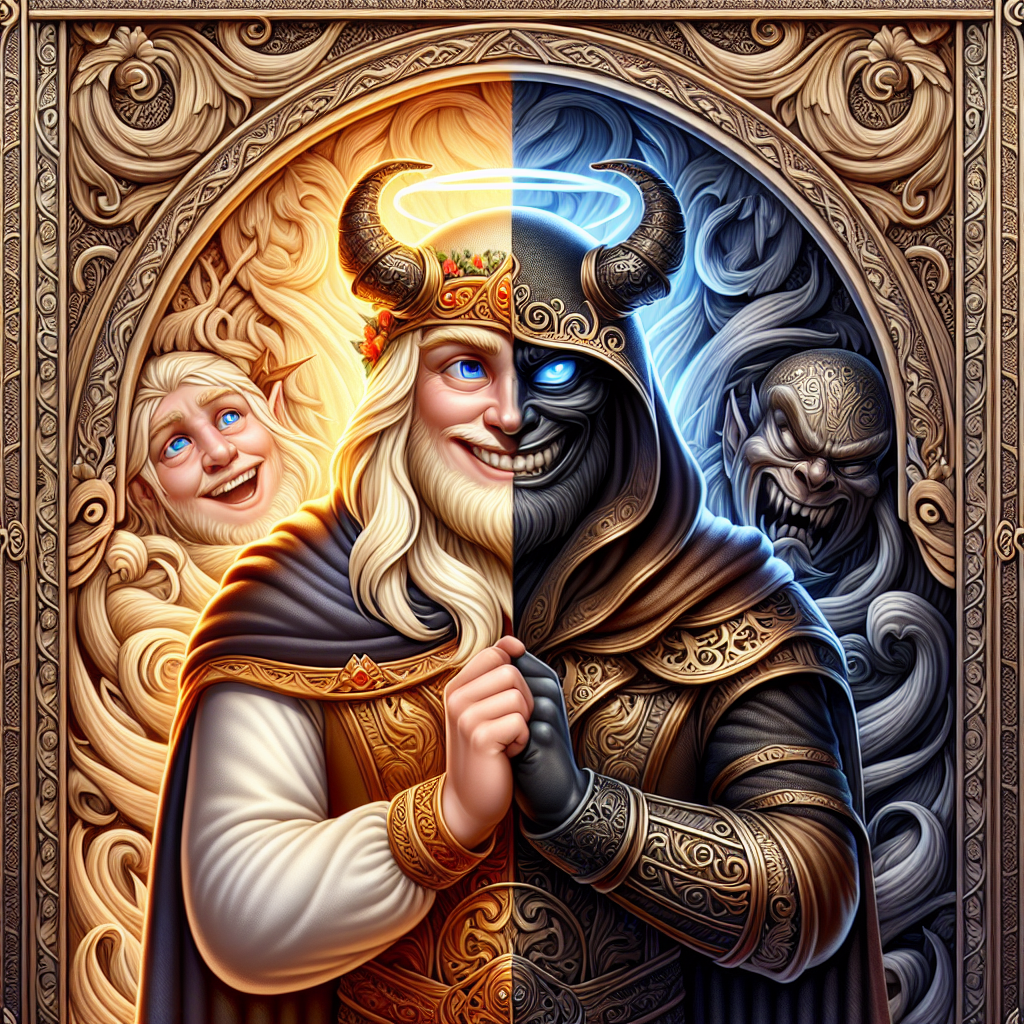
Loki, the god of mischief in Norse mythology, has long intrigued audiences not only because of his cunning and charm but also due to his complex duality as both a friend and foe. Beyond the tales of epic battles among gods, Loki embodies the theme of duality, reflecting the unpredictable nature of life, loyalty, and deception. This article delves into the multifaceted character of Loki, exploring his roles as both a beloved ally and a formidable adversary in mythology, literature, and modern popular culture.
The Origins of Loki
In Norse mythology, Loki is often depicted as the son of the giants Farbauti and Laufey, marking him as a figure outside the traditional pantheon of the Aesir gods. This lineage establishes his transitional identity as both a god and a being of chaos. Loki’s relationship with the Aesir, particularly Odin and Thor, is both complex and conflicted. Loki’s intelligence and trickster nature initially make him a valuable companion to the gods, helping them in their many endeavors and often providing clever solutions to daunting problems.
Loki as Friend
-
The Source of Solutions:
Loki’s role as a friend is evident in several myths where his wit provides the gods with much-needed assistance. For instance, in the tale of the theft of Thor’s hammer, Mjölnir, Loki devises a plan to retrieve it by disguising Thor as the goddess Freyja. His cunning is instrumental in the resolution of numerous conflicts among the gods, showcasing his importance as a loyal ally when it matters most. -
Familial Bonds:
The god’s relationships extend beyond friendly alliances. Loki is a blood brother to Odin, further cementing his ties to the Aesir. His complicated family dynamics present him as not just an outsider but as part of the Aesir’s internal family structure. His children — including Fenrir, Jörmungandr, and Hel — are integral figures in Norse mythology, giving further definition to his complex identity. Even though his progeny often symbolize strife and chaos, they highlight the duality of his existence as both friend and foe, reflecting how familial ties can be both a source of strength and downfall.
The Betrayal
Despite his numerous acts of loyalty, a pivotal moment arises in Loki’s mythological narrative: his betrayal of the gods. In a tragic turn, Loki’s jealousy and ambition lead him to conspire against the Aesir, culminating in the death of the beloved god Baldr. This act not only marks Loki’s transition from ally to adversary but also demonstrates his capacity for destruction. The aftermath of Baldr’s death leads to Loki’s capture and punishment, reinforcing the idea that even those closest to us may harbor treachery.
Loki as Foe
-
Ominous Schemes:
Loki embodies the archetype of the trickster, someone who can shift allegiances at will. His deceptive tactics are not limited to the gods; he also manipulates mortals and giants alike, often playing both sides of a dispute to his advantage. Loki’s nature as a foe is characterized by his disdain for authority and conventional order, positioning him as a disruptive force in the cosmic balance of the Norse universe. -
The Final Confrontation:
Loki’s eventual role in Ragnarök, the prophesized end of the world in Norse mythology, is perhaps the most significant testament to his villainy. Here, he leads the forces of chaos against the gods, highlighting a complete reversal of his earlier roles. The wrath and devastation that follow signify Loki’s evolution from a seemingly benign trickster to a harbinger of doom, further emphasizing his complexity.
Cultural Representations
The duality of Loki has resonated widely in literature and popular culture. In Marvel comics and films, Loki is portrayed with a blend of charm, humor, and malice. This portrayal encapsulates the essence of his character, allowing audiences to simultaneously empathize with him while also recognizing his capacity for destruction. Tom Hiddleston’s portrayal in the Marvel Cinematic Universe has contributed significantly to the character’s modern interpretation, showcasing both his loyalty to Thor and his insatiable thirst for chaos.
Literature has also embraced the complexity of Loki. In Neil Gaiman’s “Norse Mythology,” the trickster is presented in an authentic light, his actions embodying the contradictions of human nature. Readers find themselves torn between rooting for Loki’s cunning and resenting his treachery. This duality confirms that Loki is more than just a villain; he represents the chaotic and unpredictable elements of existence.
Themes of Duality
Loki’s character serves as a reflection of the human experience, revealing the internal struggle between good and evil, loyalty and betrayal. His story underscores the idea that within each individual lies the potential for both order and chaos. The question of whether Loki is a friend or foe may ultimately depend on one’s perspective — highlighting the intricate nature of human relationships, morality, and the constant battle between light and darkness.
In many ways, Loki embodies the chaos of life itself, reminding us that even those who appear to be friends may harbor hidden agendas, and that oppositions often exist within oneself. His duality prompts us to question the nature of loyalty, truth, and morality, urging audiences to reflect on their own complexities.
Conclusion
The enigma that is Loki, the god of mischief, embodies a multitude of interpretations, rooted deeply in the dualities that define our experiences. Whether as a trusted ally or a cunning adversary, he serves as a reminder that life is rarely black and white. As we navigate through our own lives, Loki stands as a potent symbol of the unpredictability of our choices and the hidden depths of our relationships. In the lore and stories surrounding Loki, we find reflections of our own intricacies, featured in the eternal struggle between friendship and enmity, loyalty and betrayal. Ultimately, Loki remains what he has always been: a timeless reminder of our complex human nature.