
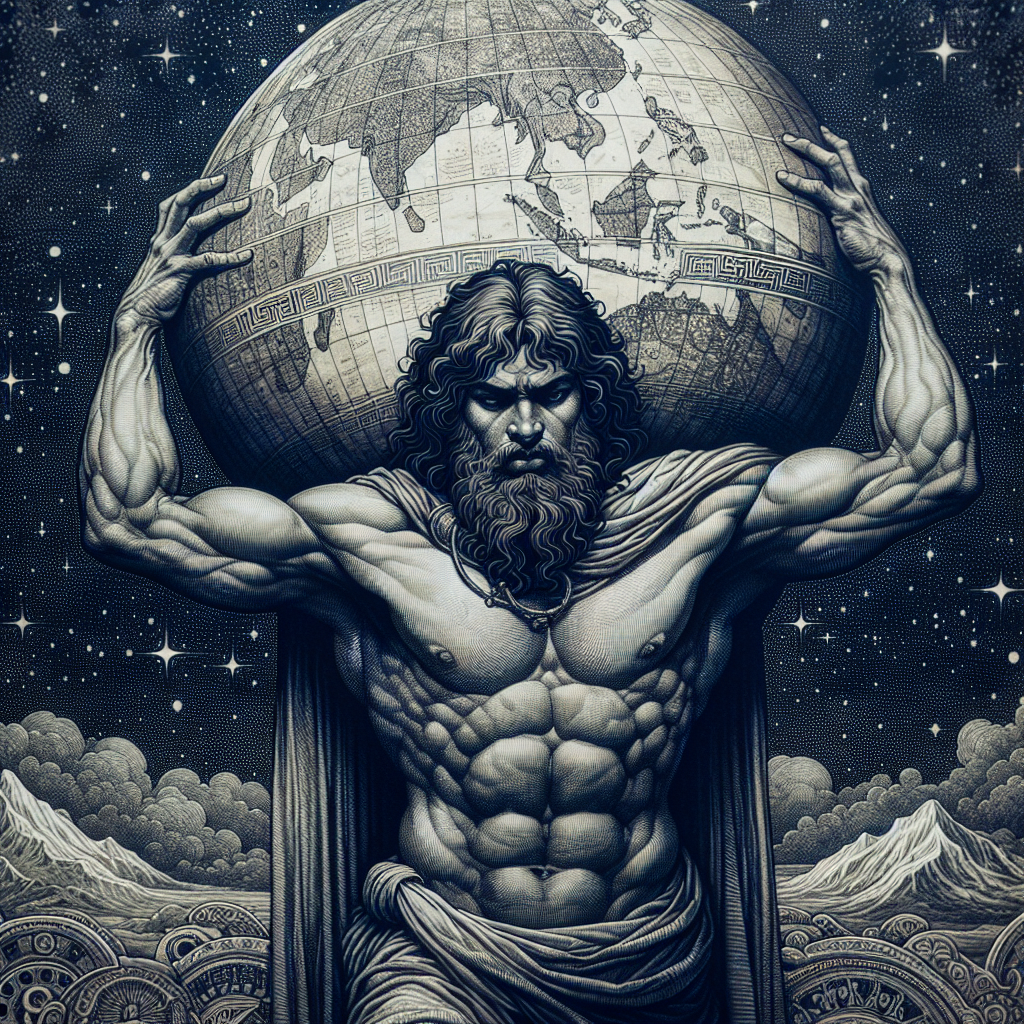
The Myth of Atlas: Bearing the Weight of the World
In Greek mythology, few figures are as iconic as Atlas, the Titan condemned to bear the heavens on his shoulders. This compelling image, engrained in art and literature, evokes a powerful metaphor of burden and resilience. Yet, beyond the surface of this well-known myth lies a complex narrative that delves into themes of responsibility, fate, and the nature of strength. In examining the myth of Atlas, we uncover a rich tapestry of meanings that continues to resonate with modern audiences.
The Origins of Atlas
Atlas, the son of the Titan Iapetus and the ocean goddess Asia, played a significant role in the Titanomachy—the epic battle between the Titans and the Olympian gods. Upon the Titans’ defeat, Zeus condemned Atlas to hold up the heavens for eternity, serving as a grim reminder of the consequences of rebellion.
The imagery associated with Atlas has evolved over time. Originally depicted as a figure athwart the sky, the modern interpretation appears as a giant bearing the Earth on his shoulders. This misinterpretation reflects humanity’s intrinsic desire to visualize the immense burdens we carry, both physically and metaphorically.
Symbolism of Burden
At its core, the myth of Atlas encapsulates the idea of burden. Atlas represents the weight of responsibility and the challenges life presents. In many ways, he embodies the archetype of the “Everyman,” struggling under the strain of daily pressures. Whether it’s the responsibility of providing for a family, managing a career, or grappling with personal aspirations, each individual can identify with the weight Atlas bears.
This understanding is especially relevant in today’s fast-paced society, where the idea of “carrying the world on one’s shoulders” resonates deeply. Many people feel overwhelmed by the collective pressures of life, often sacrificing mental health and personal well-being. In this light, the myth of Atlas serves as a poignant reminder of the importance of balance and self-care.
The Nature of Strength
The story of Atlas also invites reflection on the nature of strength. Traditionally, strength is perceived as an unwavering ability to endure and withstand hardship. However, the narrative reveals a more nuanced perspective. Atlas’s burden is not simply one of physical strength; it also encompasses emotional and spiritual dimensions.
In the myth, Atlas’s punishment is perpetual, raising questions about resilience and despair. Is it strength if one cannot find a way to break free from the weight they bear? The limitations placed on Atlas can symbolize the societal structures that bind individuals, creating a cycle of suffering. In this sense, resilience becomes an act of defiance against the constraints of fate, prompting individuals to seek new paths despite overwhelming odds.
Feminine Counterparts and Shared Burdens
While Atlas is predominantly depicted as a male figure, it’s vital to recognize the feminine aspects of burden in mythology and society. Female figures often carry their own burdens, whether as caretakers, nurturers, or warriors. Characters like Gaia (Mother Earth) or Demeter (goddess of harvest) illustrate how the weight of the world is not confined to a singular gender.
In many narratives, women are often the unsung heroes carrying the emotional and spiritual loads of their families and communities. The shared nature of these burdens invites a broader conversation about collective responsibility. Just as Atlas supports the heavens, many individuals in society carry the emotional weight for others, often at their own expense. This parallel can enrich our understanding of Atlas’ burden, positioning it within a shared human experience rather than a solitary struggle.
The Philosophical Implications
The myth of Atlas also invites philosophical inquiry. What does it mean to bear the weight of responsibility? Is there virtue in suffering? The questions are foundational to human existence and exploration of purpose.
From an existential standpoint, Atlas represents the individual’s confrontation with absurdity—a concept articulated by thinkers like Albert Camus. Life often involves struggles that seem devoid of reason, akin to Atlas’s eternal punishment. Yet, within this absurdity, there exists potential for hope. The act of bearing one’s burdens can be transformative, allowing for personal growth and deeper understanding of oneself and the world.
The Modern-Day Atlas
In contemporary culture, the figure of Atlas has been repurposed in various contexts, often symbolizing both individual and collective resilience. From literature to art, the depiction of Atlas continues to evolve, reflecting societal values and struggles.
The image of Atlas is frequently invoked to address issues such as climate change, social justice, and economic inequality. Individuals and groups carrying the metaphorical weight of societal problems echo the Titan’s burden—urging collective action and empathy. This connection enriches our understanding of contemporary challenges, reminding us that we are all interconnected and that we share the weight of the world.
Conclusion
Ultimately, the myth of Atlas offers a profound exploration of burden, strength, and resilience. In a world increasingly characterized by pressures, this ancient story remains relevant, encouraging deeper reflection on our shared experiences and responsibilities. As we navigate the complexities of modern life, we can draw inspiration from Atlas’s myth—not merely as a tale of endurance, but as a call to recognize our interconnectedness and the importance of supporting one another in our respective journeys.
In embracing the lessons of Atlas, we acknowledge that, while the weight of the world may seem overwhelming, it is the relationships we foster and the burdens we share that empower us to rise together. As we share the load, we can forge pathways toward understanding and healing—transforming our existence from one of solitary struggle to a collective journey. In doing so, we become more than mere figures bearing weight; we become titans in our own right, reshaping the world we inhabit.


