
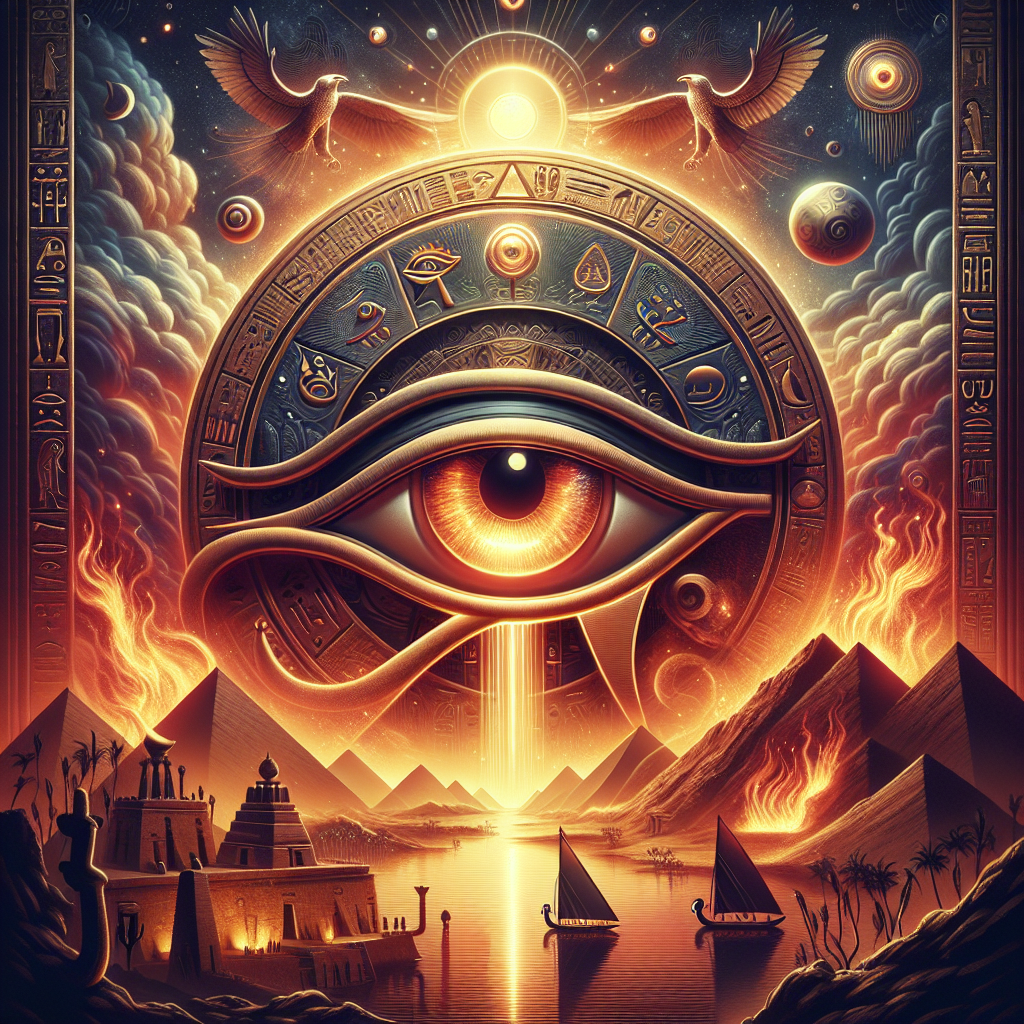
The Eye of Horus, or ‘Wedjat,’ has been a symbol of protection, royal power, and good health since ancient Egyptian times. It embodies a wealth of myths and profound meanings that seep into various narratives throughout history. Yet, the Eye carries with it a darker tale: that of restoration and revenge, filled with gods, power struggles, and cosmic balance.
Origins of the Eye of Horus
The Eye of Horus can be traced back to a myth regarding the Egyptian god Horus, the sky god who embodied kingship and protection. According to ancient myth, Horus lost one of his eyes in a battle against Set, the god of chaos, who embodied disorder and violence. The loss of Horus’s eye was not just a physical injury; it represented a symbol of suffering and loss in the ongoing struggle between order (Horus) and chaos (Set).
Fortunately, the story does not end in defeat. As to the return of his sight, the god Thoth, the deity of wisdom and writing, intervened. He restored Horus’s eye, which became an emblem of healing and wholeness. In this context, the Eye of Horus symbolizes not just loss, but restoration, making it a potent symbol of return from the darkness of chaos into the light of order.
The Cultural Significance of the Eye
The Eye of Horus’s significance extends beyond mere mythology; it has permeated various aspects of ancient Egyptian culture. It adorned amulets, tombs, and offerings, acting as a protective talisman. This myth was an iteration of the eternal struggle between good and evil, resonating deeply with the Egyptian psyche.
Moreover, the Eye was intricately connected to concepts of mathematics and health. Each fraction of the eye represented a specific measurement, making it indispensable in Egyptian numerology. The Eye also served a practical purpose as a restorative symbol, linked to healing practices, such as the use of amulets fashioned in its shape.
The Stolen Eye: Mythology’s Darker Side
Beyond its restorative qualities, the Eye of Horus also encapsulates themes of theft and vengeance. The concept of the stolen eye operates not only as an indication of loss but also as a catalyst for revenge. In the cycle of creation and destruction, the act of theft becomes a significant event that catalyzes future actions in myth.
One intriguing narrative involves the character of Set, who robbed Horus of his sight — a metaphorical and literal act of aggression. This became a catalyst for retribution, which is central to many mythological constructs. Horus, having lost part of himself in the act, wages a fierce battle against Set. This perpetual clash serves as a reminder that the cosmic balance is fragile and that suffering often engenders a quest for restoration.
The reclaimed eye also introduces the idea of vengeance. The act of restoring the Eye significantly represents victory over chaos. This mythology suggests that the restoration is often paved with the stones of revenge, and the cycle continues in an arduous push towards balance.
The Archaeological Impact
The tale of the stolen Eye of Horus doesn’t just thrive in myth; it reflects the historical complexities surrounding ancient cultures and their artifacts. The Eye, despite its mythological roots, often became an object of value in tombs and temples. Similar to our modern-day experiences with valuable artifacts, such symbols have a way of attracting thieves and connoisseurs alike.
Throughout history, numerous objects assumed to represent the Eye of Horus have gone missing or been stolen, mirroring the myth itself. Every act of theft reverberates with echoes of chaos and imbalance, asking the potent question; what does it mean to possess something of sacred importance? Thus, the story of the Eye of Horus invites us to reflect on the archaeological narrative surrounding loss, theft, and the quest for restoration.
Modern Interpretations
The tale of the Eye of Horus has transcended its ancient roots and permeated modern culture, appearing in cinema, literature, and even fashion. The symbol remains a point of intrigue, often utilized to convey themes of protection and enlightenment. Yet, the darker undertones of theft and revenge surface in various adaptations.
Contemporary retellings sometimes shy away from conveying the complexity of the myth, preferring instead simplified narratives that highlight only the protective aspects of the Eye. However, those who delve deeper into its mythology encounter a rich tapestry of human experiences — loss, vengeance, restoration, and the continual quest for balance.
Modern interpretations also resonate with contemporary struggles for justice, balance, and protection in society. The Eye of Horus becomes a metaphor for resilience and the collective fight against ignorance and chaos in a world that often feels turbulent.
Conclusion
The Stolen Eye of Horus embodies a rich interplay of themes that have persisted for millennia. It functions as a dual symbol of loss and restoration, entwined with narratives of vengeance and cosmic order. The dynamic between Horus and Set epitomizes the eternal struggle between order and chaos, a concept that remains relevant in today’s world.
From its ancient roots to its modern adaptations, the Eye of Horus continues to captivate and inspire, reminding us of the complex interplay between suffering and healing, theft and restoration, chaos and order. It serves as a powerful symbol of humanity’s eternal quest for balance and justice against a backdrop of struggle, urging us to confront our own battles for restoration in an ever-changing landscape.


