
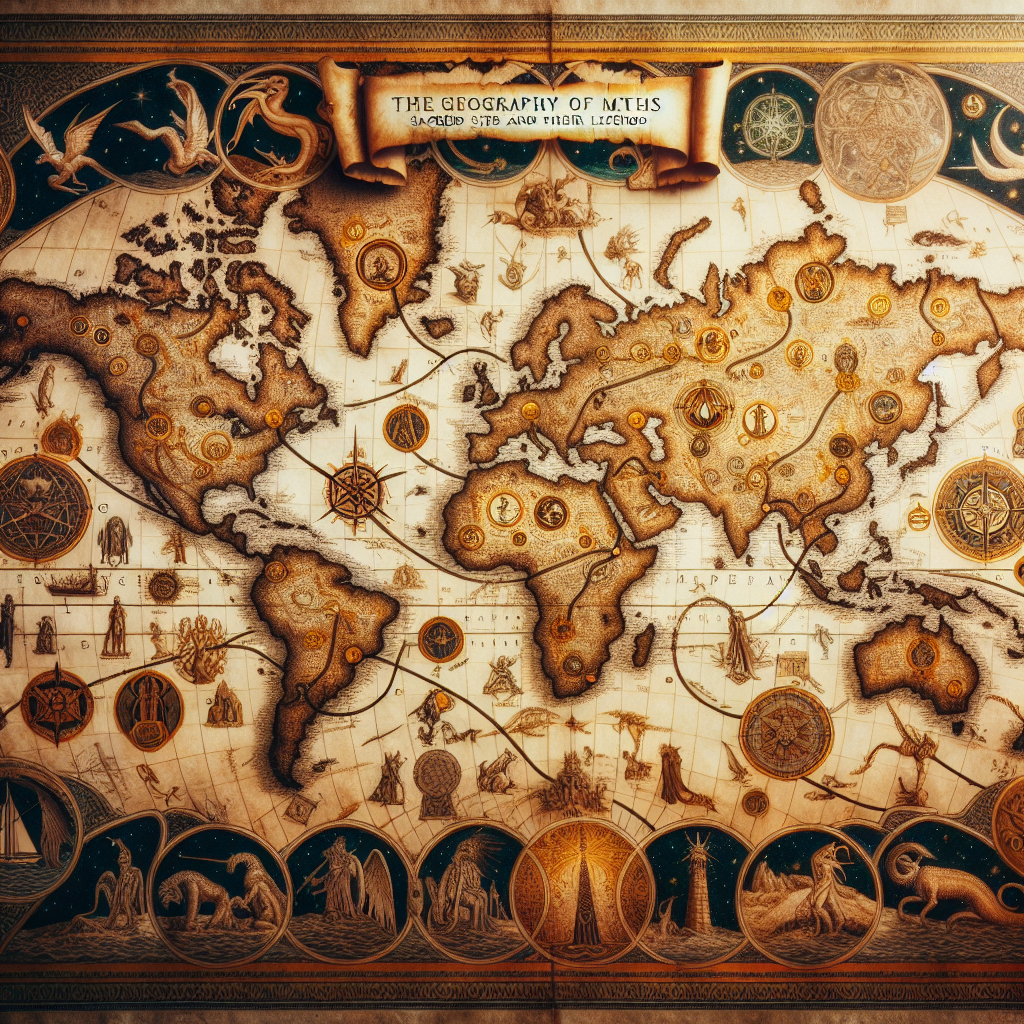
The intersection of geography and mythology offers a fascinating lens through which to explore human culture, belief systems, and historical narratives. Sacred sites, ranging from mountains to rivers to ancient cities, are often imbued with deep spiritual significance. These locations not only anchor myths but also embody the values, aspirations, and worldviews of the cultures that venerate them. This article delves into the geography of myths, exploring key sacred sites from around the world and the legends associated with them.
The Sacred Mountain: Mount Olympus
In ancient Greek mythology, Mount Olympus was regarded as the dwelling place of the gods. Towering over the Thessalian plain, it stood not just as a geographical feature but as the embodiment of divine power and authority. The peak was believed to be shrouded in clouds, symbolizing the separation between the mortal world and the divine.
Legends abound regarding Olympus; it’s often depicted as a paradise where gods like Zeus, Hera, and Apollo engaged in their affairs and conflicts. The mountain’s physical presence inspired stories that explained natural phenomena, human behavior, and cultural practices. For the ancient Greeks, Mount Olympus was not merely a location; it was a symbolic representation of their understanding of the cosmos.
Rivers of Myth: The Ganges
The Ganges River in India is considered one of the most sacred rivers in Hinduism. Revered as the goddess Ganga, the river is not just a source of life but also a channel for spiritual purification. According to legend, the Ganges descended from the heavens to Earth to cleanse humanity of its sins, making its waters a vital element in Hindu rituals, funerals, and daily worship.
The geography of the Ganges is inextricably linked to these beliefs. Its riverbanks host many pilgrimage sites, such as Varanasi, where thousands gather to bathe in the river to wash away their sins. The Ganges serves as both a physical and symbolic mediator between the human experience and the divine, reinforcing the belief that geography shapes spirituality.
The Stone Circles of Britain: Stonehenge
Stonehenge, located in Wiltshire, England, is one of the most iconic sacred sites in Europe. Its circular formation of massive stones has stirred imaginations for centuries. Archaeological studies suggest that Stonehenge was built over several millennia, evolving from burial mounds to a monumental stone circle.
Theories about its purpose range from astronomical observatory to a site for rituals. Ancient Britons might have believed that the stones harnessed mystical powers or connected them uniquely to their ancestors. This geography of stones, arranged meticulously in relation to the sun and moon, continues to intrigue researchers and reverberate with modern spiritual seekers who see it as a conduit for ancient wisdom.
The Desert: The Grand Canyon
While not traditionally considered a sacred site, the Grand Canyon holds great spiritual significance for several Native American tribes, including the Havasupai and Hopi. The sheer scale and beauty of the canyon evoke a sense of the sublime and connect believers to their ancestors and the spiritual world.
According to Hopi mythology, the Grand Canyon is home to the Sipapu, a portal through which their ancestors emerged into the world. This sacred geography offers a narrative that emphasizes interconnectedness with nature, aligning human identity with the broader cosmos. The Grand Canyon serves as a powerful reminder of nature’s majesty and the stories woven into its vastness.
Mountains, Myths, and Connection: Mount Meru
In Hindu and Buddhist cosmology, Mount Meru is depicted as the center of the universe, a sacred mountain connecting the heavens, Earth, and the underworld. It is often described as the residence of the deities and a place where creation takes place. The mountain’s geographic symbolism resonates within many cultures across Asia, influencing art, architecture, and spiritual practices.
Various legends describe gods and heroes undertaking sacred journeys to Mount Meru, reinforcing the idea that mountains serve as thresholds between the mundane and the divine. The legends surrounding Mount Meru reflect a broader truth in many cultures: sacred sites often act as metaphors for life’s journey, embodying the aspirations of those who seek enlightenment or divine communion.
Urban Sacredness: Jerusalem
Jerusalem is perhaps one of the most contested and revered cities in human history. It holds special significance for Judaism, Christianity, and Islam, making it a geographical focal point of faith and legend. The city itself is steeped in sacred narrative, from the stories of King David establishing it as a capital to the significance of the Western Wall and the Al-Aqsa Mosque.
Legends associated with Jerusalem speak to its role as a sacred geography par excellence. According to Jewish tradition, the Temple was built where Abraham nearly sacrificed his son Isaac, while Christians see it as the location of Jesus’ crucifixion and resurrection. For Muslims, the Al-Aqsa Mosque is considered the third holiest site in Islam. The layered significance of Jerusalem serves as a testament to humanity’s desire to find meaning in place, illustrating how geography shapes faith and history.
The Intersection of Geography and Mythology
These sacred sites illustrate a profound truth: geography is not merely a backdrop for human stories but an active participant in myth-making. Sacred landscapes evoke powerful emotions, shape beliefs, and inspire rituals that connect communities to their past and each other. The legends associated with these sites often inform moral values, social structures, and interpersonal relationships, reinforcing cultural identity.
As we explore the geography of myths, we recognize that sacred sites transcend their physical attributes. They embody collective memories, aspirations, and spiritual quests. Each site tells a story, inviting contemplation and reflection on our connections to the earth and each other.
Conclusion
The geography of myths, punctuated by sacred sites and their legends, reveals much about the human condition. These locations foster connections to spirituality, history, and identity, reminding us of our intricate relationship with the environment. They encapsulate stories that have been passed down through generations, enriching our understanding of not just the places we inhabit but also of the diverse societies that shape our world. Whether in the towering peaks of Olympus, the winding currents of the Ganges, or the ancient stones of Stonehenge, the interplay of myth and geography continues to resonate deeply within our collective consciousness.


